
Vu Dan Tan
Vu Dan Tan (1946–2009, Vietnam) was a seminal figure in the development of contemporary Vietnamese art. A self-taught artist, he was born in Hanoi to the renowned playwright Vu Dinh Long (1896–1960) and began his creative journey working at the cartoon film studios of Hanoi Television. His subsequent travels to Russia and Cuba proved formative, as he began to experiment with painting and developed a distinctive visual language that blended humor, critique, and poetic sensibility.
In 1990, together with his wife Natalia Kraevskaia, he founded Salon Natasha – the first private art gallery in Hanoi. At a time when Vietnam’s cultural institutions were largely state-controlled, Salon Natasha emerged as a groundbreaking forum for experimental, cross-disciplinary, and non-commercial art practices. The space became a vital meeting point for artists, intellectuals, and the public, nurturing an alternative art scene that played a defining role in shaping the trajectory of contemporary art in North Vietnam post-Đổi Mới (Renovation).
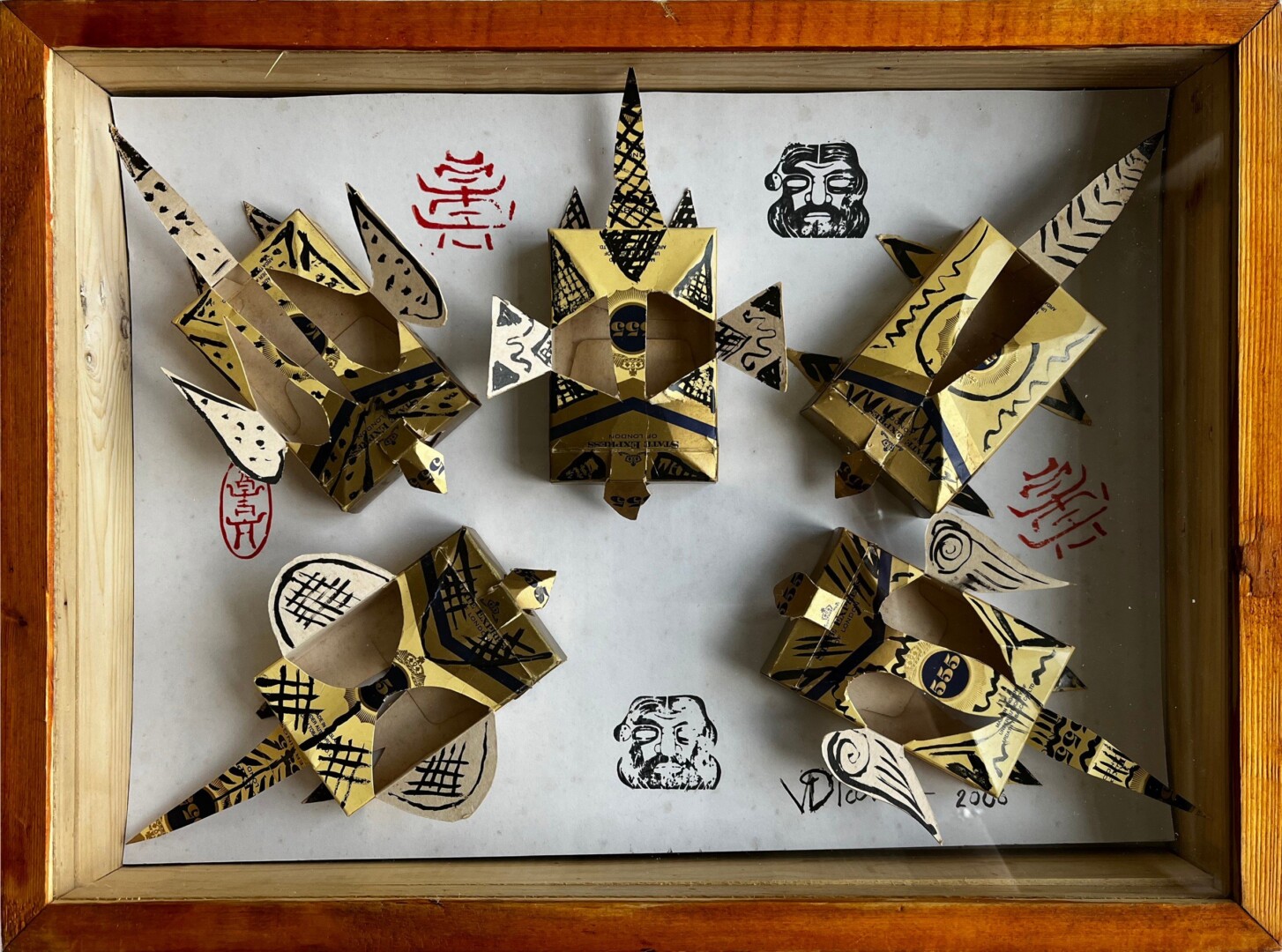
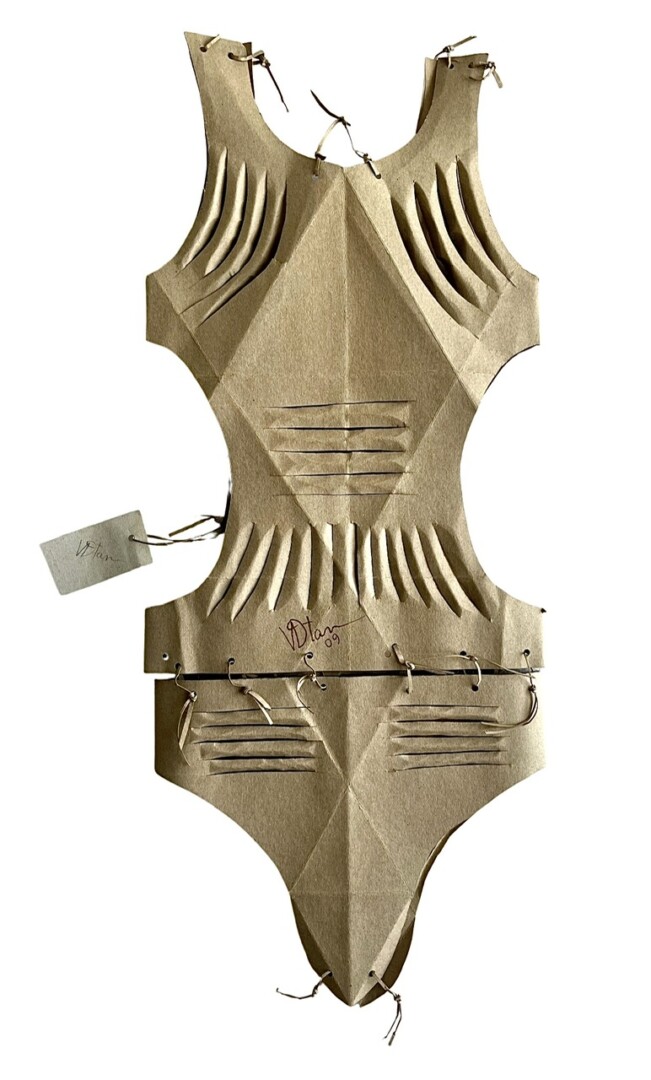
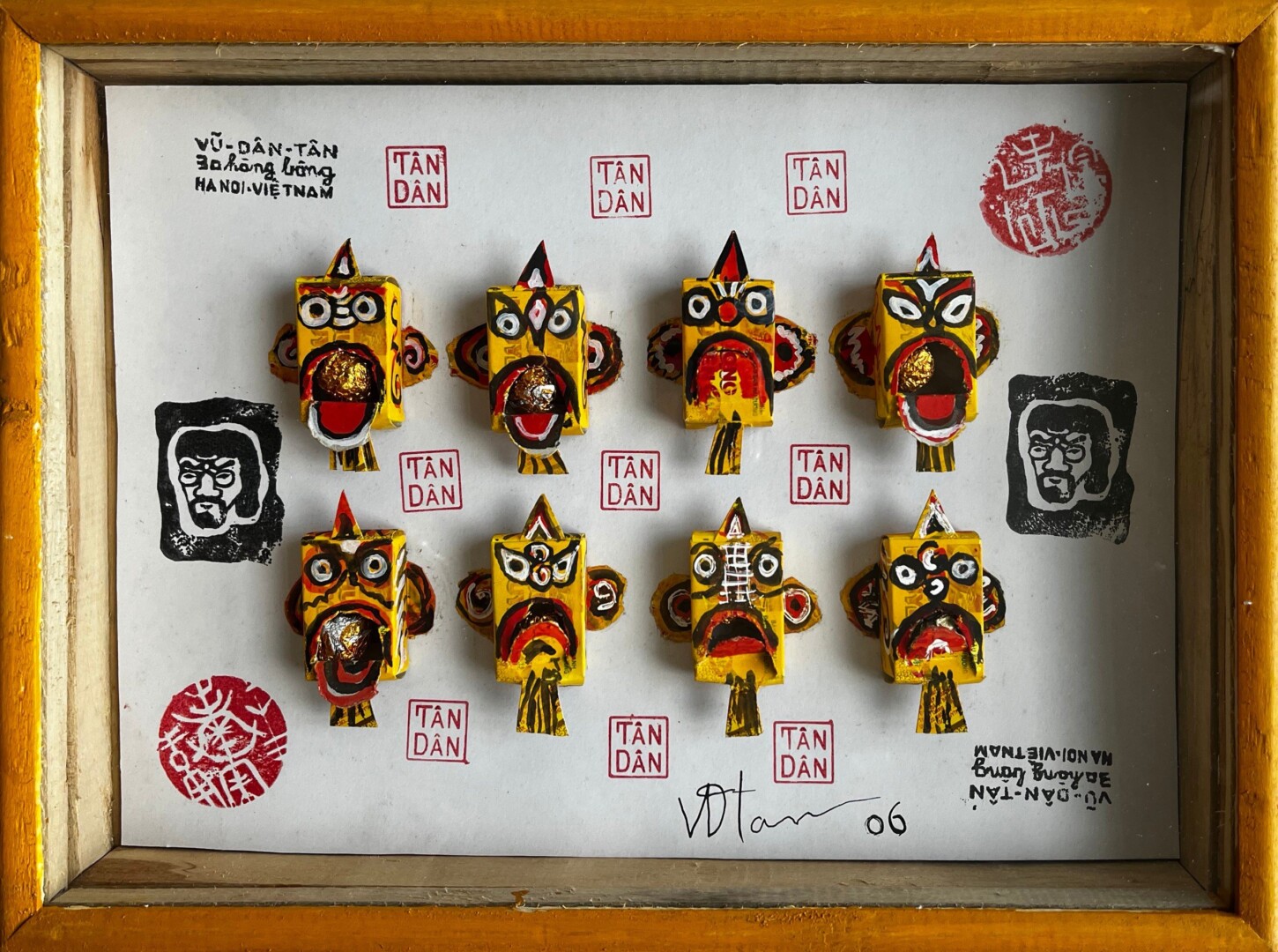
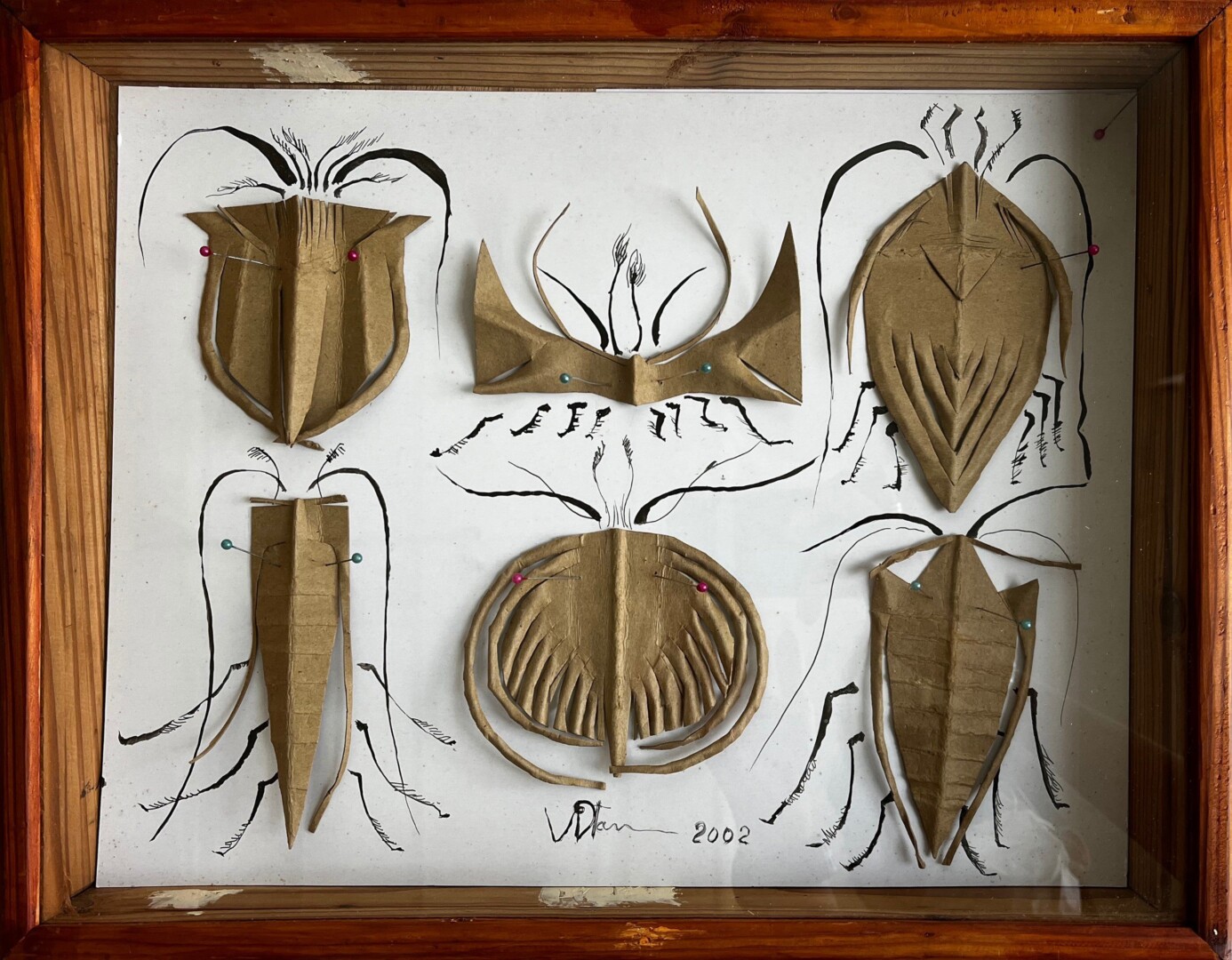
Vu Dan Tan was known for his inventive use of found and recycled materials – cardboard boxes, candy wrappers, cigarette packets – which he transformed into imaginative assemblages that often blur the boundaries between play and critique. His practice, at once spontaneous and deeply reflective, evokes a sense of childlike wonder while subtly questioning notions of value, permanence, and authorship.
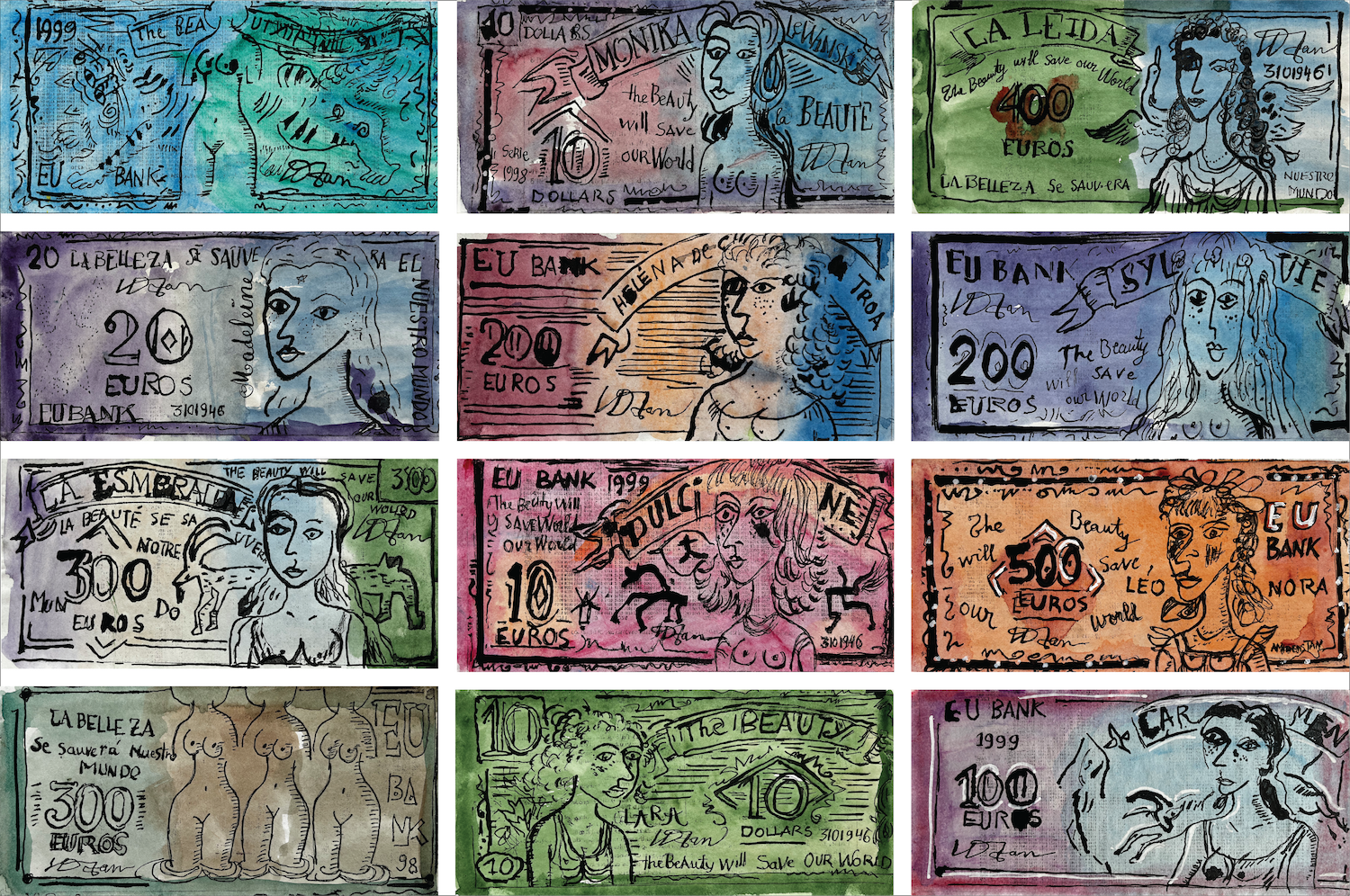
Working across painting, collage, and installation, Vu Dan Tan’s oeuvre spans from intricate mixed-media works to large-scale constructions resembling temples or boats, all imbued with a distinct lyrical absurdity. His works have been widely exhibited and collected in France, Germany, Finland, Japan, Australia, New Zealand, the United States, Singapore, and Vietnam, affirming his enduring influence as one of Vietnam’s most innovative and independent artistic voices.