Pham Thanh Tam
-
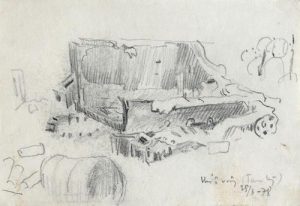
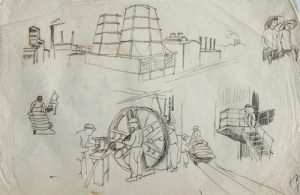
Hai Phong cement factory

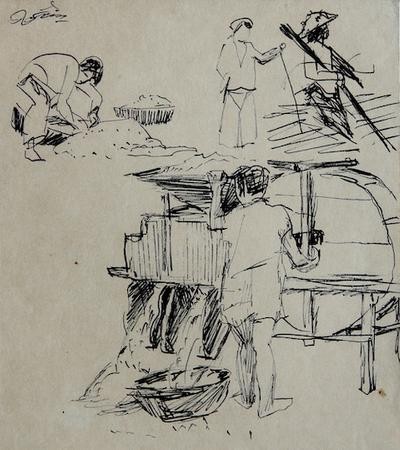
In Vietnam during the 1960s, when photography remained costly and scarce, sketching was the most immediate means of recording life at the front. Across the country, young people enrolled in “Resistance Classes” (educational groups formed by the North Vietnamese government during the war, often in precarious conditions to continue schooling and foster nationalist sentiment), learning to wield both brush and rifle, preparing themselves to endure the harshest battlefields.
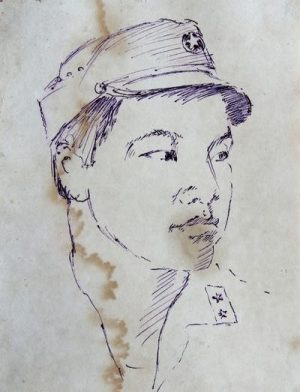
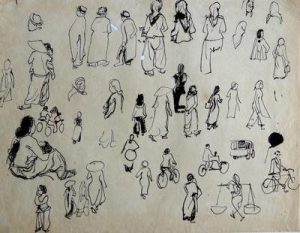
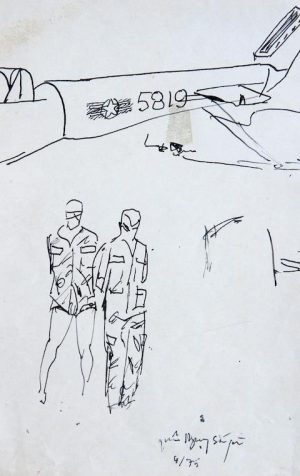
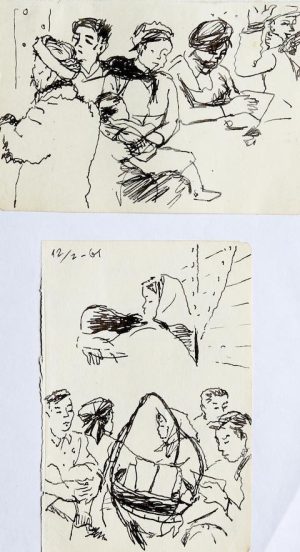
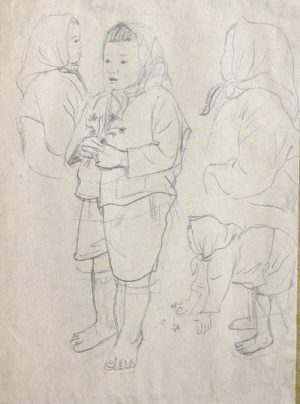
It was in this atmosphere of fire and smoke that Pham Thanh Tam’s wartime sketches took shape – born between the roar of aircraft overhead and the deafening crash of bombs. From the Dien Bien Phu campaign in 1954 through the 1960s and 1970s, Tam worked tirelessly in the trenches and shelters, capturing scenes of daily life and combat: soldiers marching and resting, mothers stooped in the tunnels, villagers persevering in the fire-swept zones of Vinh Linh, Quang Binh, and Ha Tinh.
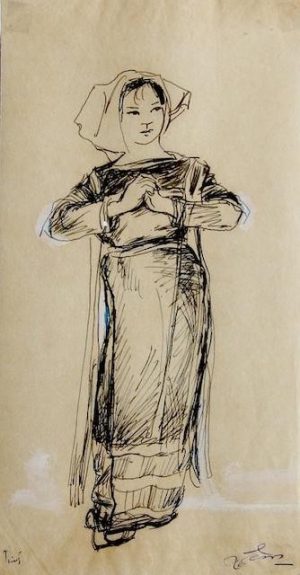
Tam’s works are more than documentary records; they are quiet offerings of love and witness. In them, one sees the focused gaze of a militia girl on the training ground, or soldiers resting by a stream. Under rainstorms of bullets and bombs, he drew with astonishing composure, producing thousands of sketches that together read like an epic diary of resilience.
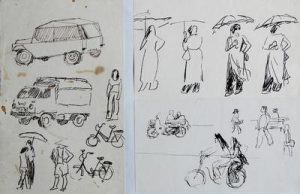
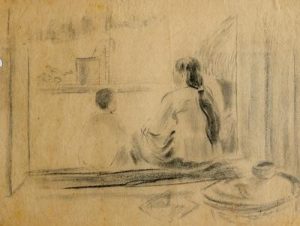
Many of these works turn away from scenes of direct combat, focusing instead on the ordinariness of life in wartime – fleeting, tender, and deeply human. Yet the presence of war saturates every image; its social, political, and material realities impressed into each stroke. Like the steady heartbeat of an unforgettable era, each of Tam’s works is a fragment of memory urging us to look back, to reckon with the past so that its echoes may one day find peace.