Tran Trung Tin
-
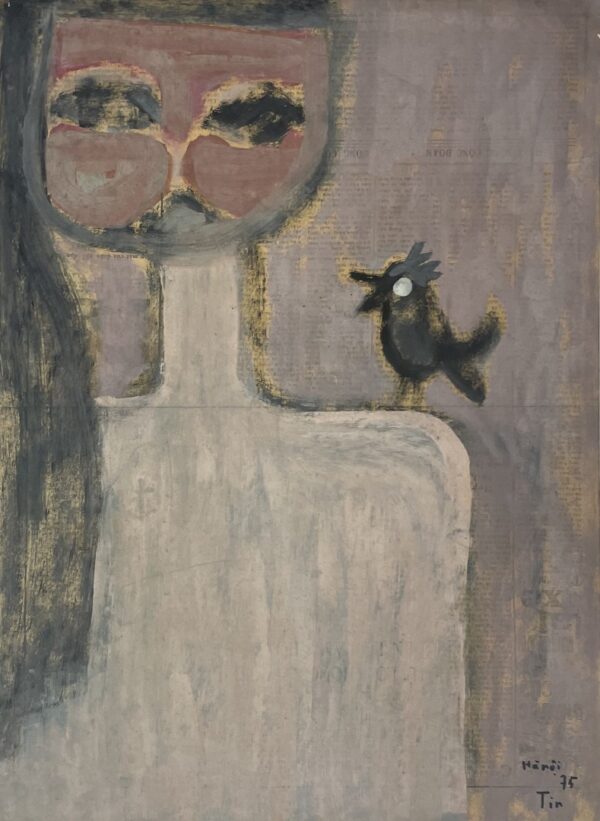
The sick bird

Tran Trung Tin – a man of rare talent and an exceptional life – was born into one of the most turbulent periods of Vietnamese history. Silenced and suffocated by disillusionment, forbidden to speak his mind, he turned to painting. In this twist of fate, the former actor and screenwriter spent the second half of his life painting quietly and relentlessly, becoming – almost unexpectedly – one of the most remarkable and singular figures in Vietnamese art.
Tran Trung Tin painted to free himself from oppression,
to seek salvation,
to break the silence,
to resist despair,
to hold on to the essence of who he was.
He painted, as his friend Tu Huy once said, “to overcome the atrocity we were all living in.”
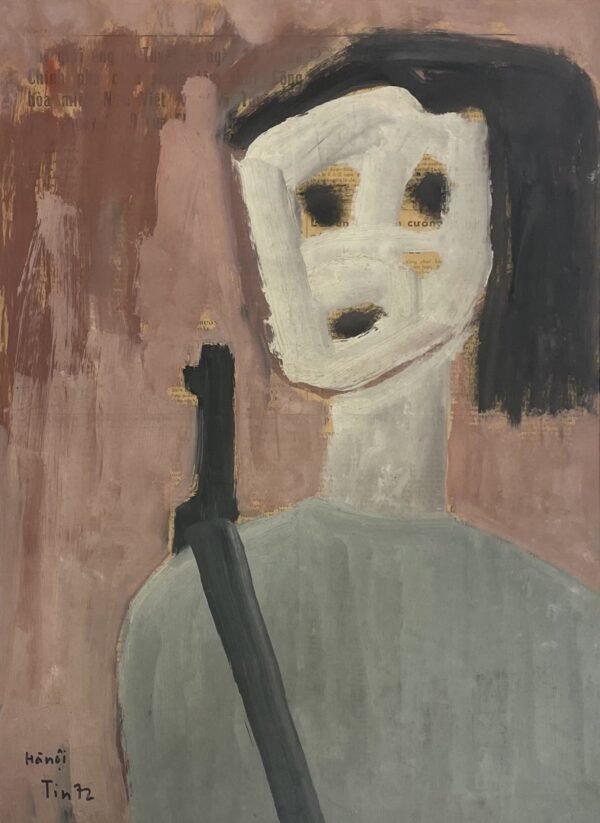
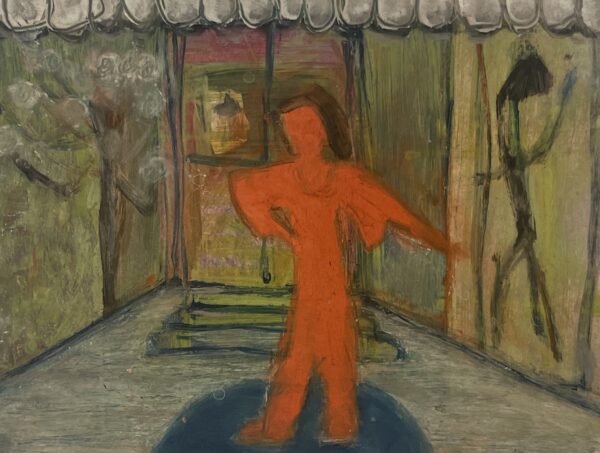
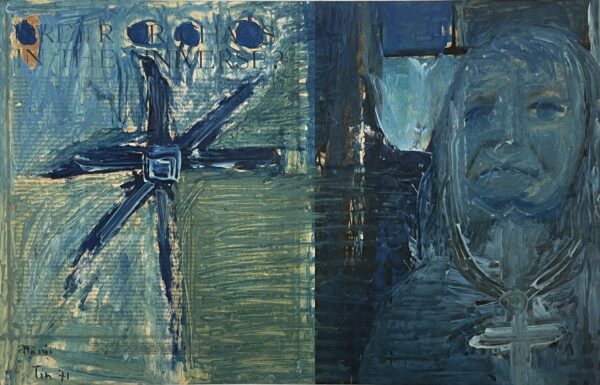
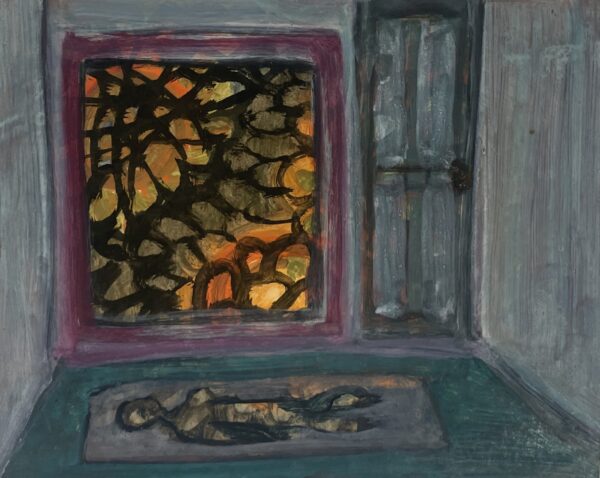
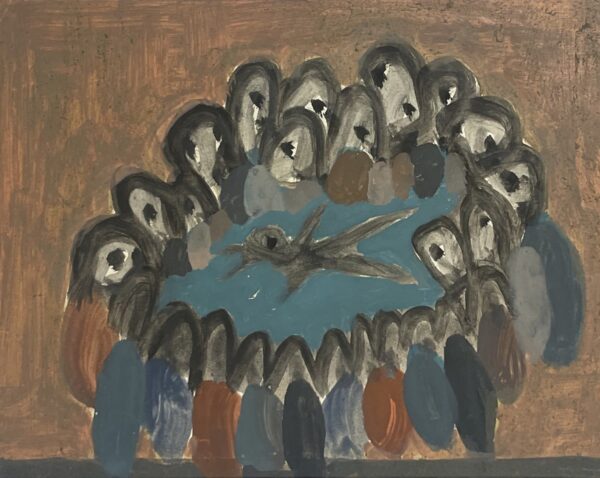
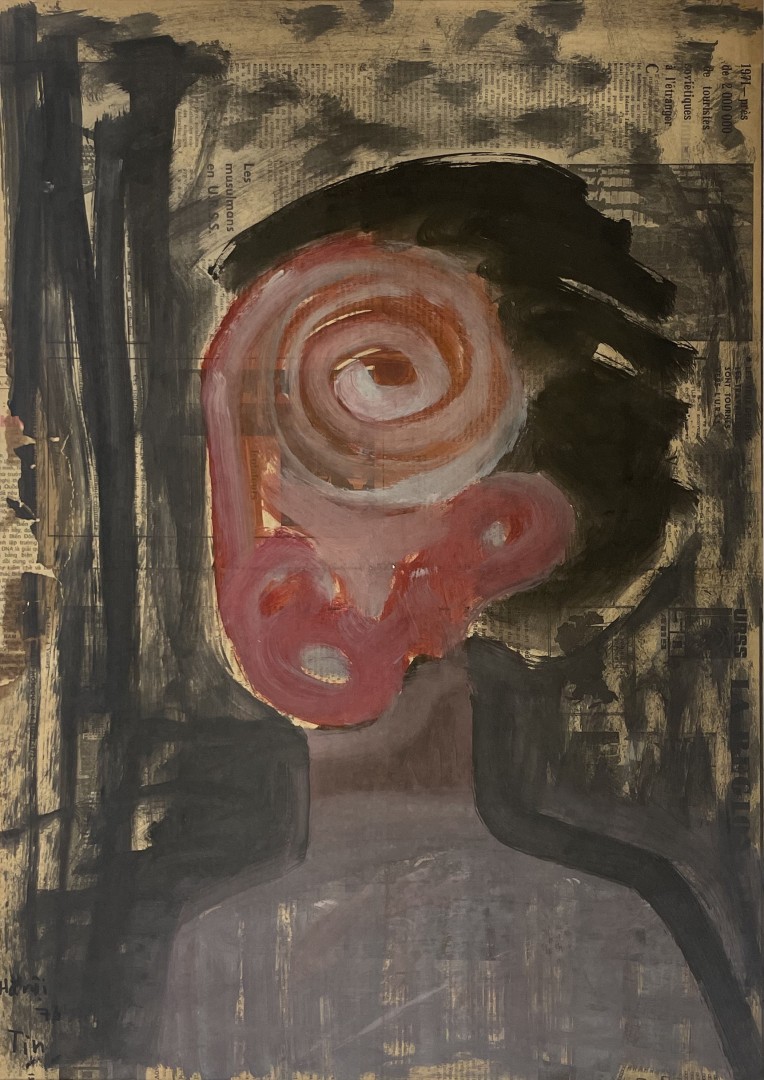
The Nguyễn Art Foundation collection features some of Tran Trung Tin’s most significant works from his celebrated series of figurative paintings on newspaper (created in Hanoi between 1972 and 1975) and on photographic paper (from the early 1980s, after his move to Saigon). These works are charged with a personal visual language that has defined his place in Vietnamese art history: the Hanoian girl with a rifle on her shoulder, the blooming flower symbolizing hope and peace, the solitary wounded bird representing the silenced and misunderstood. Though these images confront the wounds of postwar life and ideological trauma, his unrestrained brushwork and luminous, almost childlike palette infuse them with innocence and quietude, as though the artist were building a private sanctuary away from the turmoil outside.
Tran Trung Tin’s art courageously preserves and embraces what the people of his time had been forced to abandon in order to survive and adapt to the chaotic times that followed. A strange and defiant bird, an outsider in his own homeland, an outcast from his era, Tran Trung Tin’s voice continues to sing, echoing the words of his own 1964 poem: “Truth cannot be executed / Beauty cannot be buried.” His paintings give voice to those who were muted, and recall memories of what history once sought to erase.
(Edited from excerpts provided by Manzi Art Space)