How artists think, research and care
-
04 March 2022

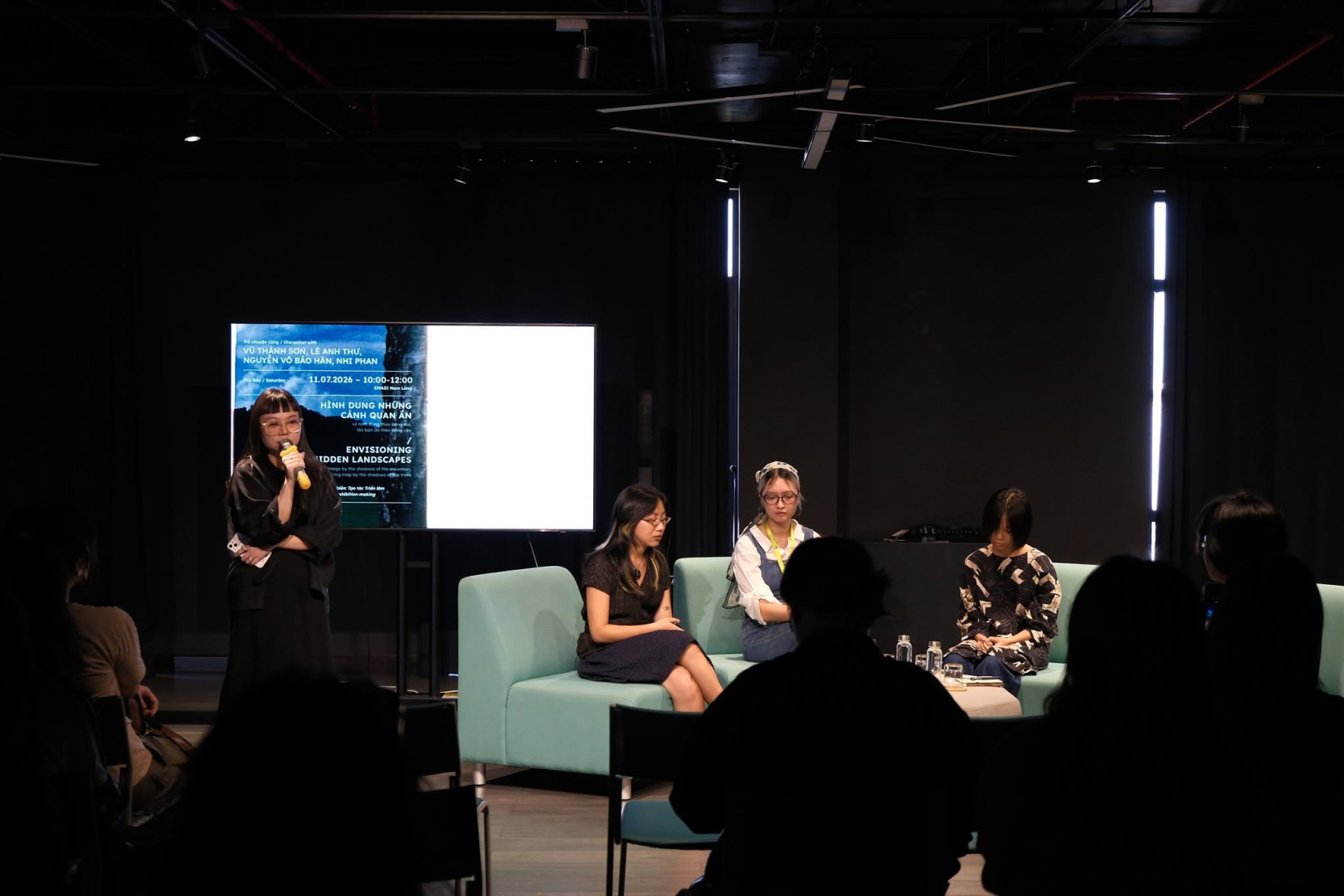
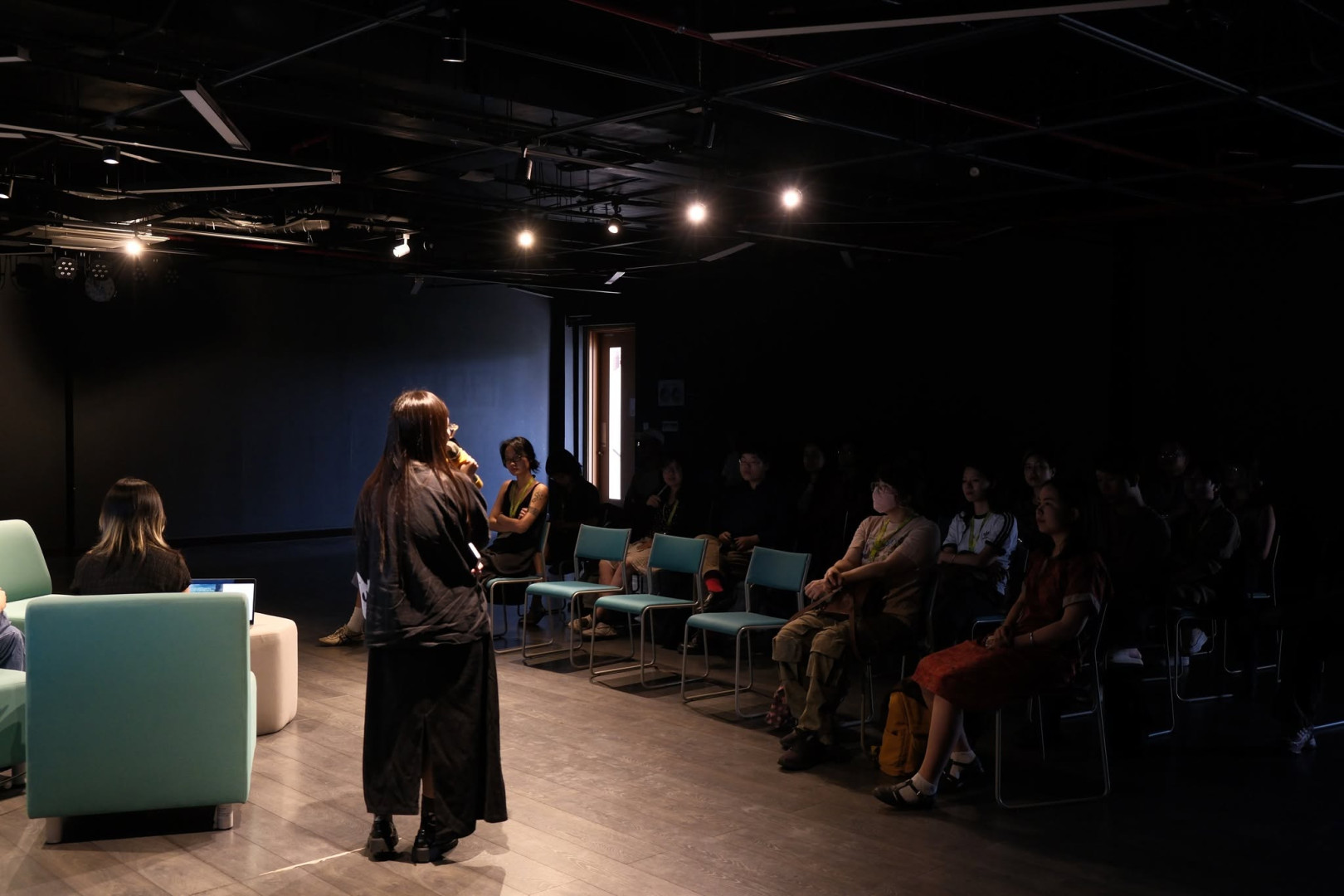
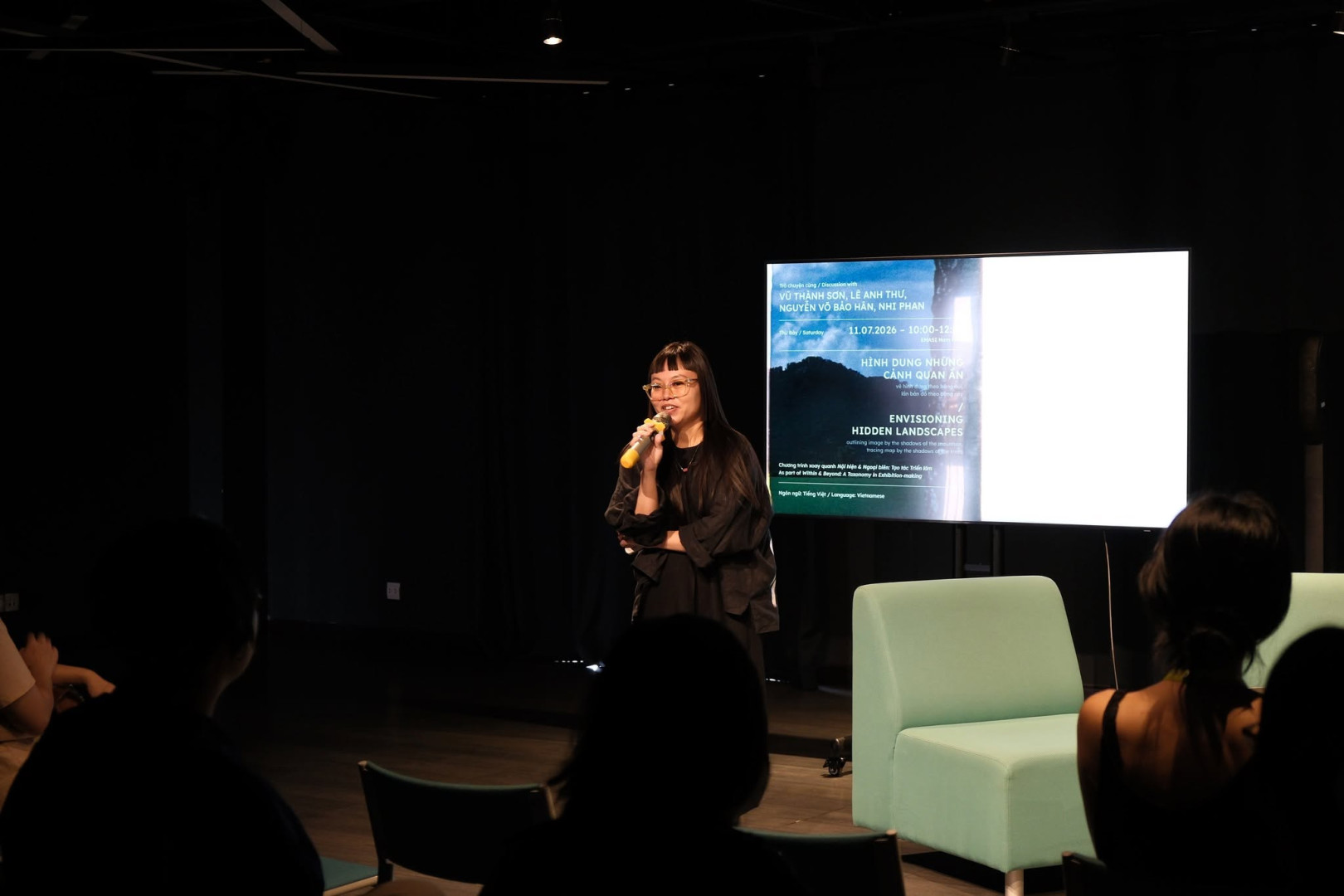
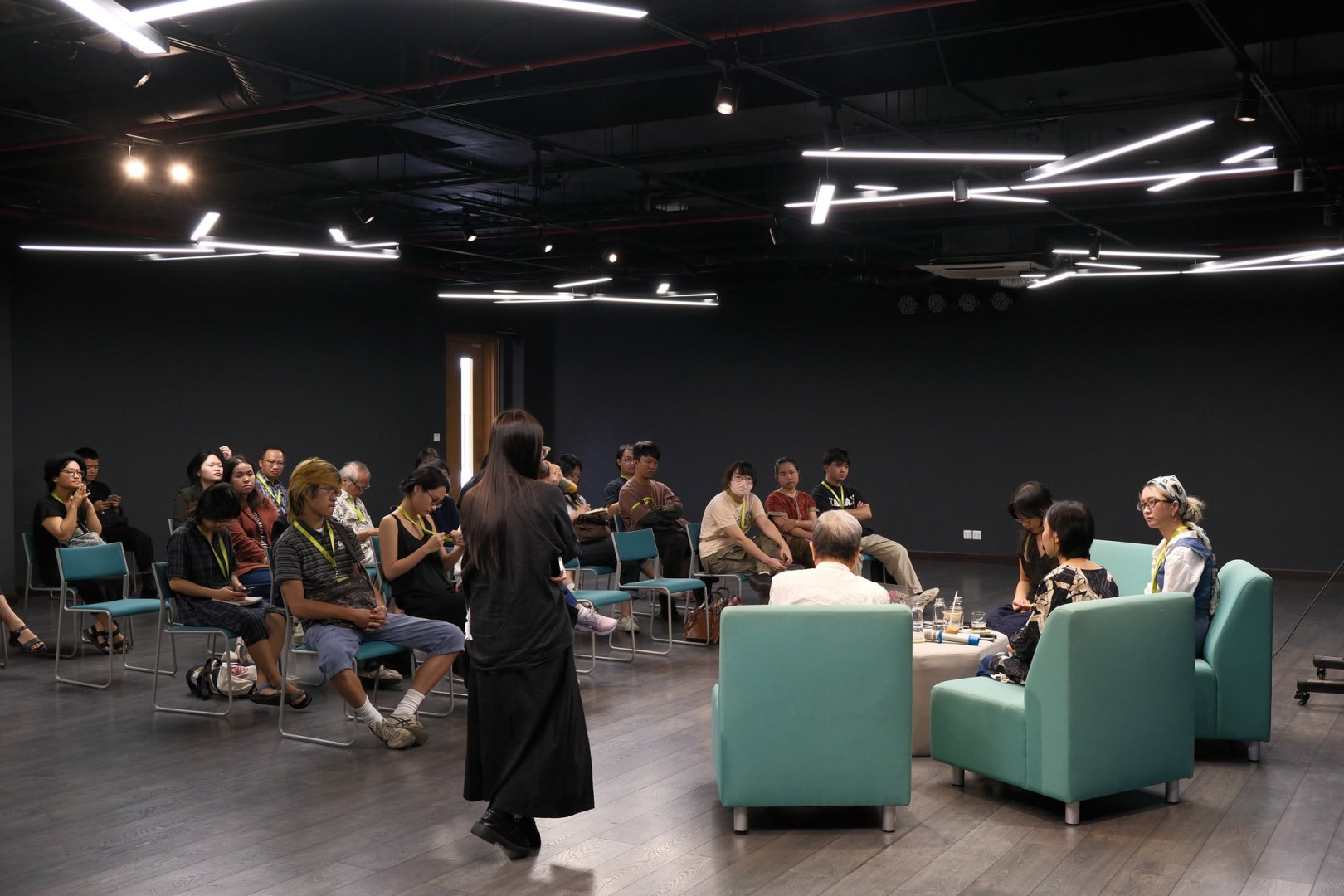
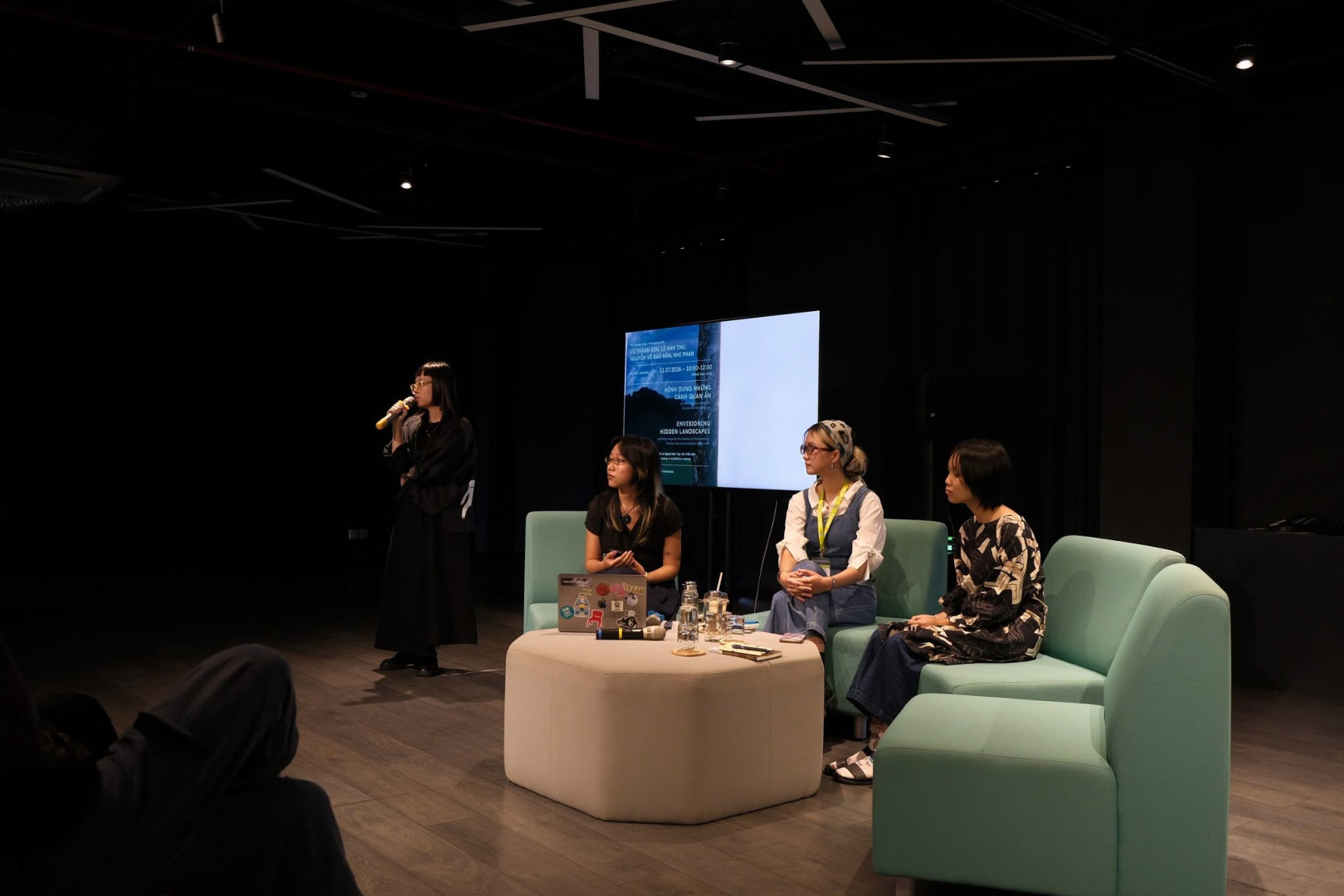
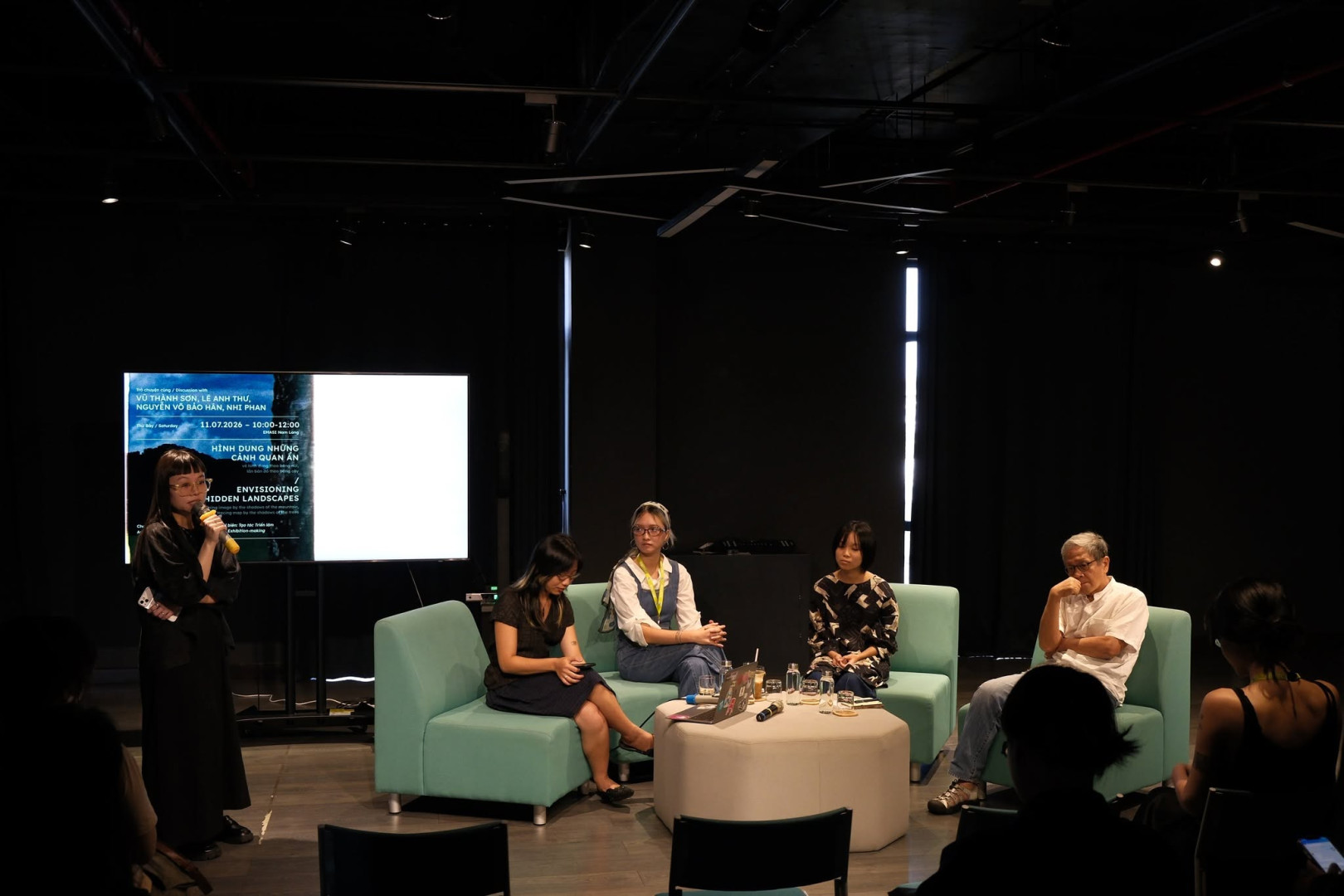
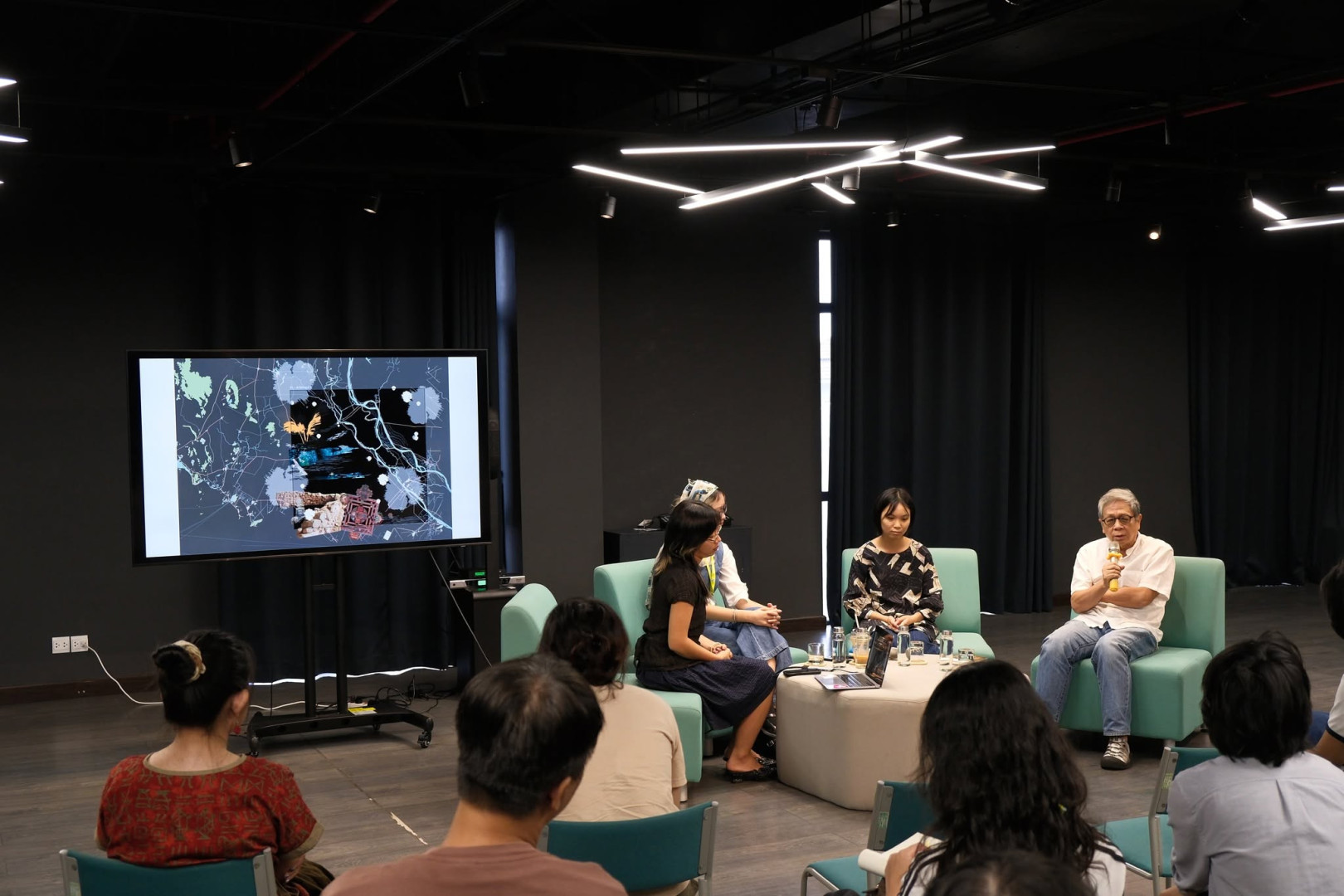
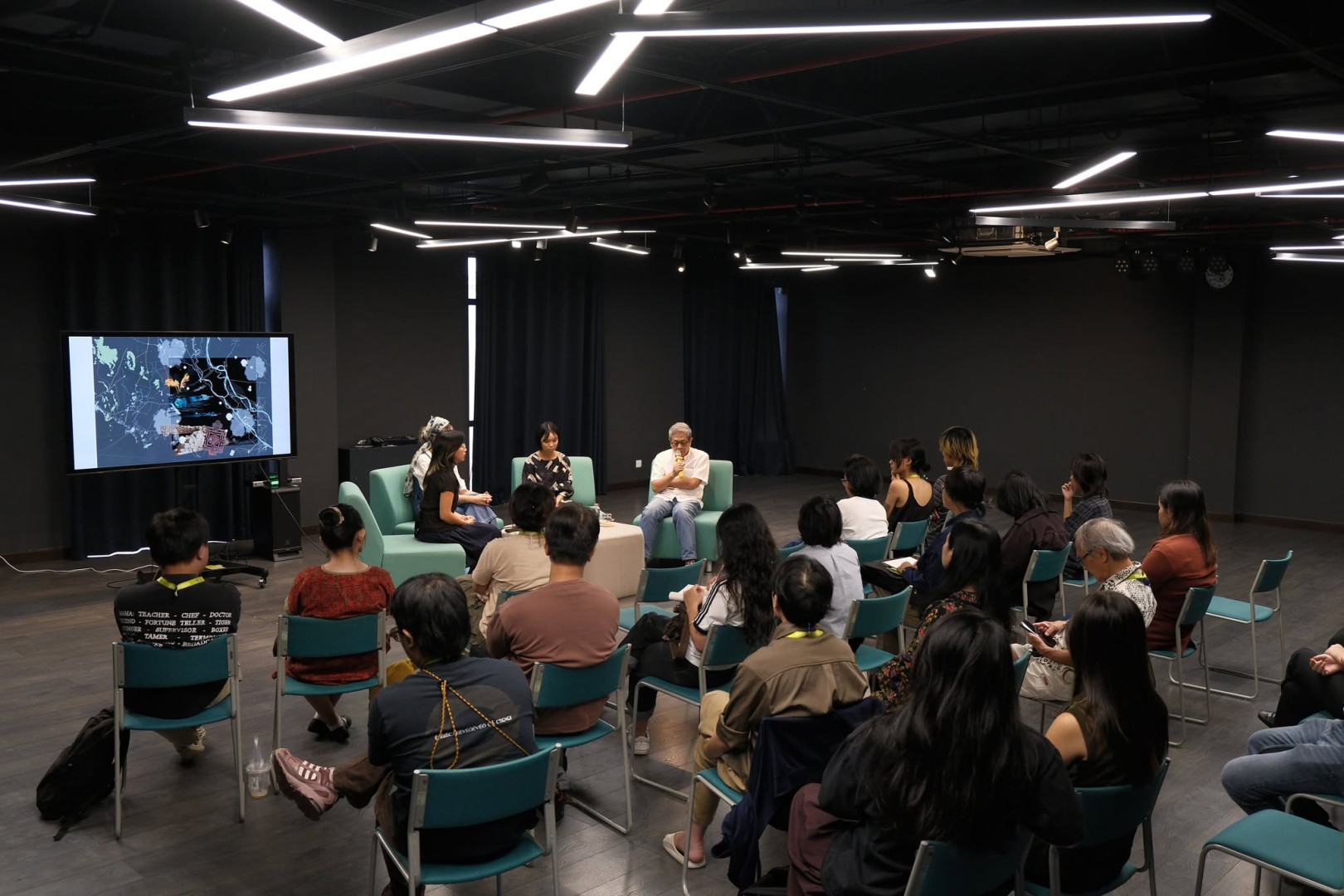
A public talk with Vu Thanh Son, Le Anh Thu, Nguyen Vo Bao Han and Nhi Phan
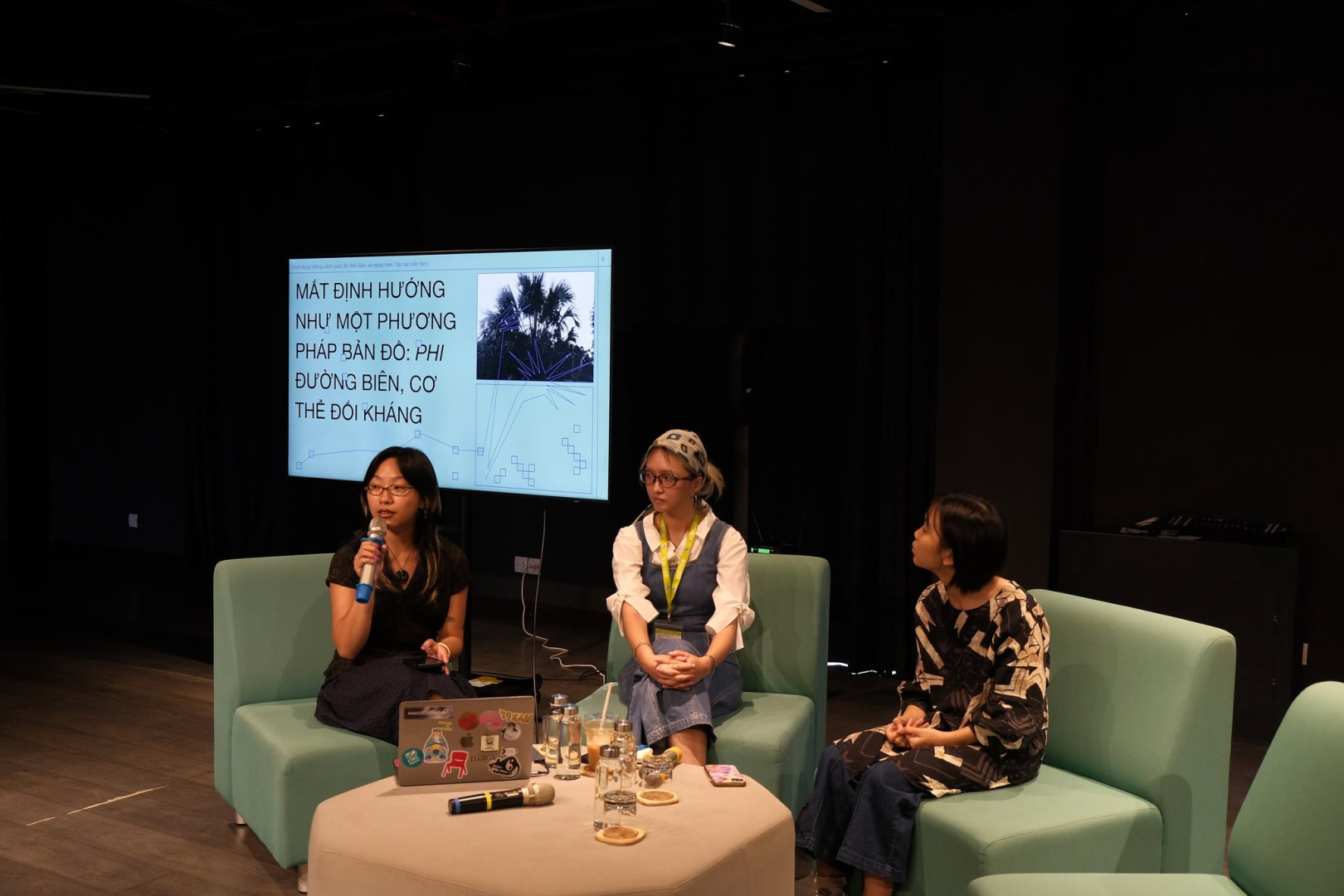
The talk and discussion Envisioning hidden landscapes: outlining the image by the shadows of the mountain, tracing the map by the shadows of the trees marks the launch of the program Within & Beyond: A Taxonomy in Exhibition-making – a yearlong educational and curatorial initiative spearheaded by Vicky Do and featuring Le Anh Thu, Nguyen Vo Bao Han, and Nhi Phan.
Curating requires ongoing interdisciplinary inquiry, discussion, and comprehension. Therein, the process of placing oneself in unfamiliar situations – aiming to explore the unknown, familiarize oneself with it, and subsequently interpret it through a personal lens to generate a broader layer of meaning – is a journey that is both daunting and deeply compelling.
Every journey begins with a trip – whether a physical excursion, a state of “being-in-space,” or a conceptual foray into an artist’s universe through their work. From there, existing thoughts and ideas expand through observation, (re)positioning, comparison, and even serendipitous discoveries.
How can a land be visualized and perceived when both the administrative boundaries and the entities that shaped it have been completely erased or are in constant flux?
Landscape is not a fixed entity defined by administrative boundaries or static historical markers, but rather a continuous process shaped by bodily experience and shifting frontiers. Taking An Giang as a point of departure, the discussion raises questions about how we “see” and define a territory, thereby proposing alternative ways of viewing the landscape: envisioning spaces that allow for disappearance, and latent conflicts to engage in an ongoing dialogue to define one another.
The talk opens with an in-depth conversation with writer Vu Thanh Son regarding his work Sóng đồng bằng (Waves of the Delta), exploring how literature employs place names to anchor memory and reconstruct the spiritual map of a historical era. Engaging the ideas sparked by the work, Le Anh Thu, Nguyen Vo Bao Han, and Nhi Phan draw upon their fieldwork experiences to address three major questions: How does the body orient itself when disoriented in a remote borderland? How can we re-map ecological entities that have completely vanished from reality? And how can we trace the historical scars hidden beneath a landscape’s surface tranquillity?