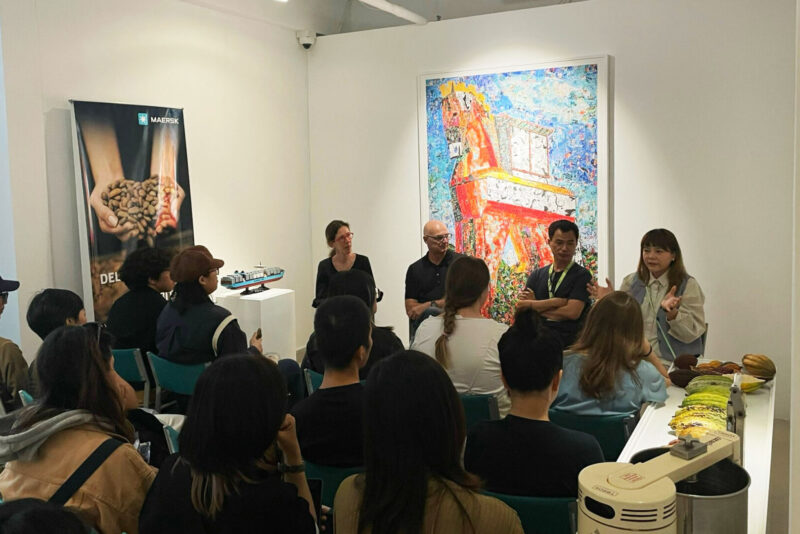
Lecture Performance: DEMONS REVENGE
-
18 January 2025

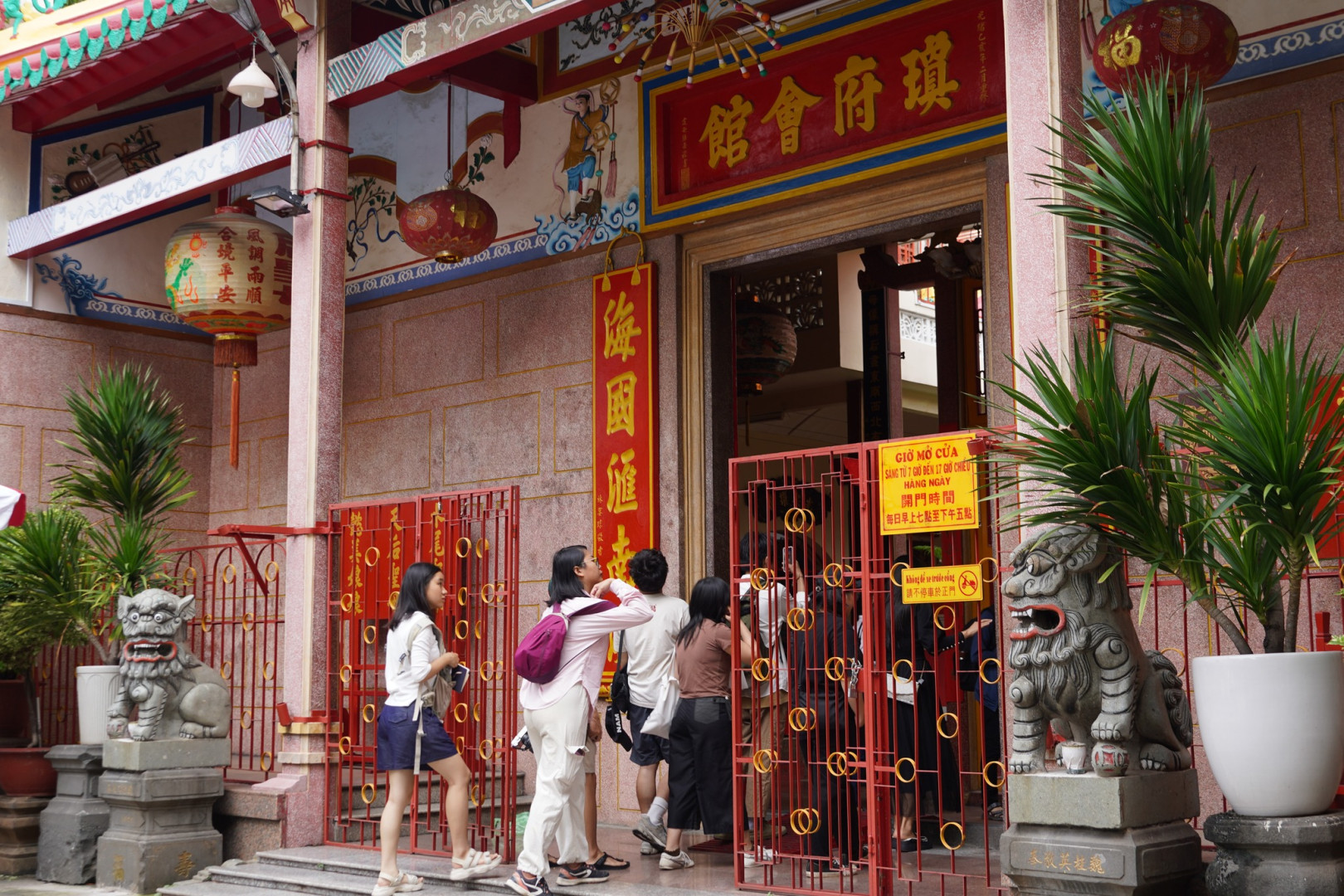


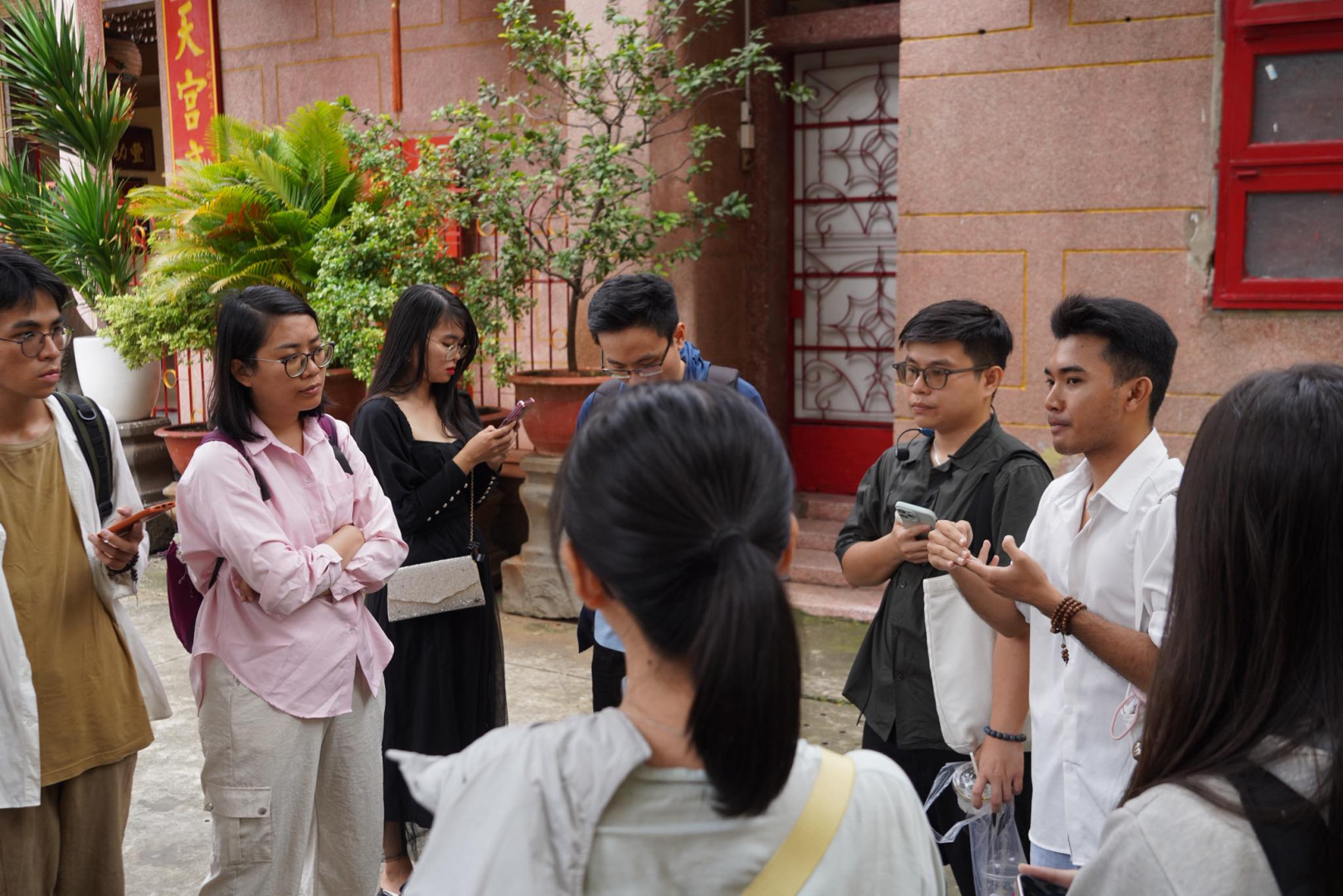


A tour guided by Tản Mạn Kiến Trúc
The Year Is XXXX re-examines the so-called adventures of missionaries and explorers during the pre-colonial and colonial era. On each vessel traveling to Indochina, these foreigners brought with them not only ambitions of physical extraction and exploitation, but also of intangibly transforming local spiritual and religious practices. Religious symbols and imagery thus went through their own transformations, transcending the fixedness of place and XXXX time markers, forming a hybrid of the foreign and local.
Following the adventures of these symbols, this public program invites participants on a field trip to Cho Lon. Led by Tản Mạn Kiến Trúc (Architecture Excursions), participants are invited to examine the introduction and changes to the image of the goddess through figures of the Guanyin, Tianhou, and Virgin Mary.
The veneration of goddesses has long been part of spiritual worship for both Vietnamese and Chinese Vietnamese people (người Hoa) living in Gia Dinh – Sai Gon – Ho Chi Minh City, and especially in Cho Lon. The Vietnamese worship Guanyin not only as a Bodhisattva but also as a gentle mother figure; indeed, many Vietnamese pagodas feature statues of Guanyin holding a small child. Statues of the Virgin Mary holding baby Jesus in Roman Catholic churches are sometimes placed in octagonal towers, similar to how Guan Yin statues are placed in front of the main hall of a pagoda. Meanwhile, for the Chinese Vietnamese, Tianhou was a famous goddess from the 17th or 18th century who protected boat people and migrants.