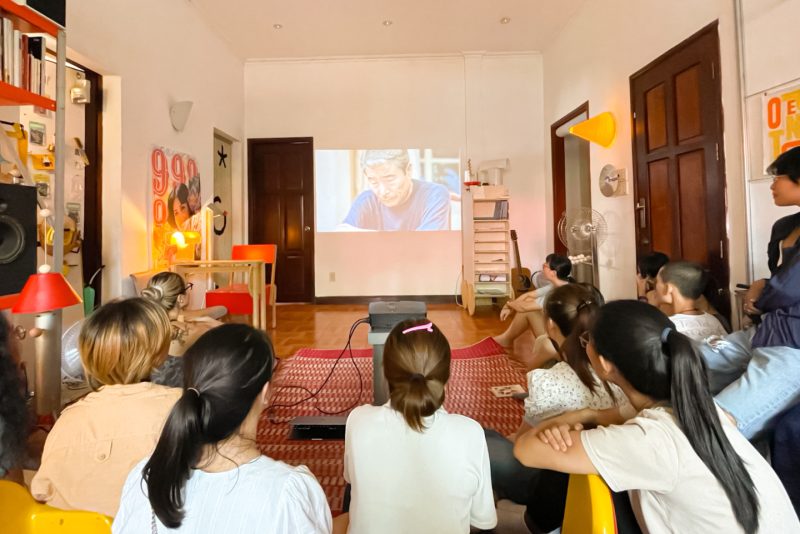
Lunch time screenings: No fighting at the dinner table
-
22 June – 20 July 2024



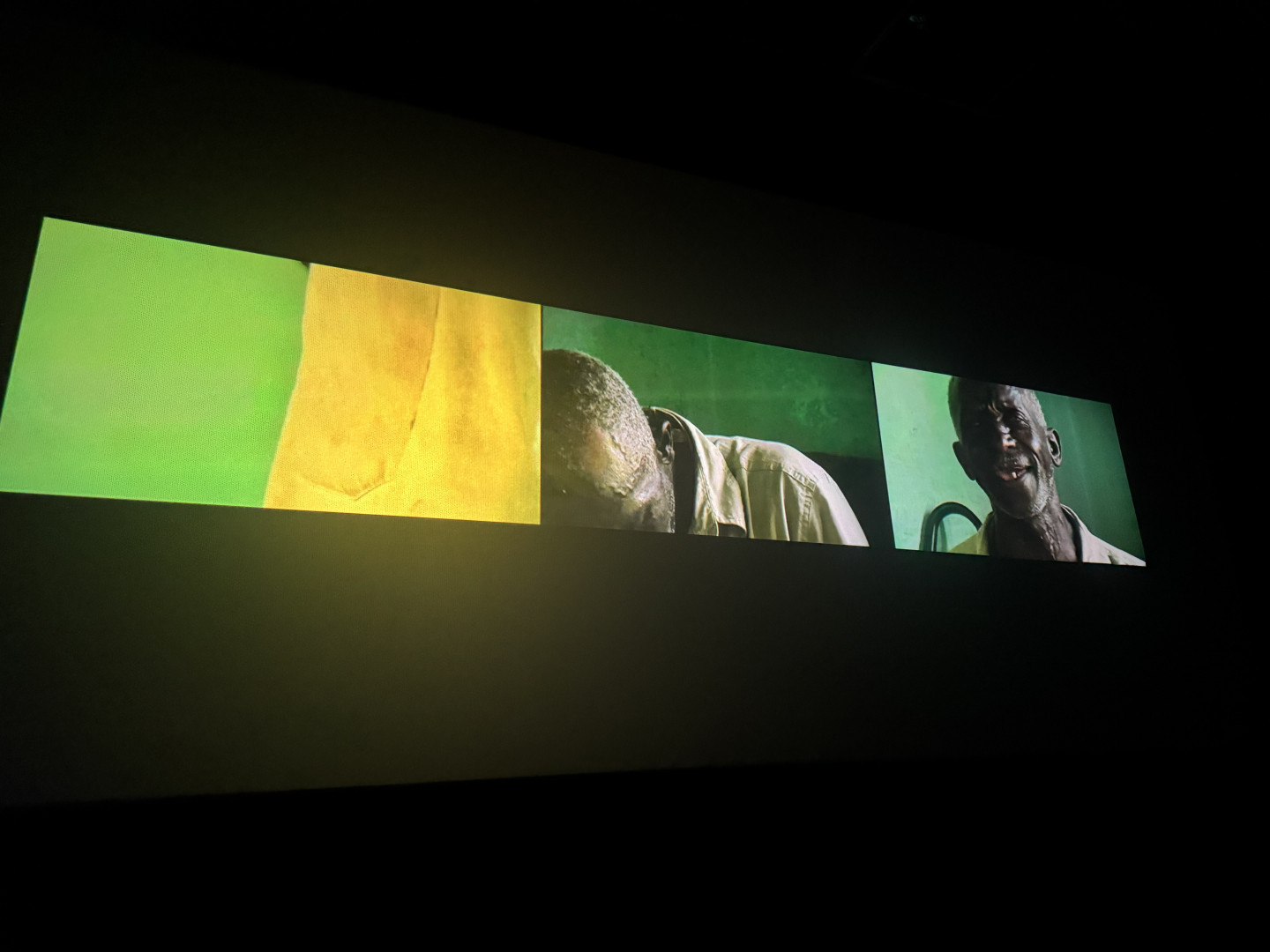

A film program curated by Adam HajYahia
Moving is diachronic; it is historical. In times of social repression and political foreclosure, movement, in its multiple connotations, becomes a ground for struggle. As organizing and embedding oneself within a movement grows precarious, and moving freely from one place to another becomes more taxing, stillness begins to plague the streets, social relations become stuck, political discussions reach a dead end, and nothing moves but the always-dying flow of capital. But moving is not the opposite of being inanimate; to move is to traverse, to undergo a passage not marked by linearity, but a shift or a turn. To move is to cross right through the frontier. A trespassed border transforms the subject upon crossing to the other side. To move is to be an unpredictable subject because, as you move, you change your colors and contours. They cannot foresee your steps. This is why the one who is on the move cannot be analyzed based on a synchronic set of conditions. Moving is not only being mobile, but being mobilized.
Observing the colonized from his point of view as both a psychiatrist and a comrade in struggle during his time in Algeria, Martinique, and elsewhere across the African continent, Frantz Fanon perceived that the built-up pressure caused by colonial violence was experienced through “contracted muscles” in the bodies of the colonized subject. In his preface to The Wretched of the Earth, Fanon articulates this contraction, this built-up tension, as something that bubbles up with a necessity to be released. Although they labor day and night, the muscles of the colonized contract due to a lack of movement, a political stasis that incapacitates their living body. When contraction is released without anti-colonial struggle, it manifests in inter-communal violence, and when the colonized dance, “it relaxes their painfully contracted muscles”, relieving the tension and letting off steam. For Fanon, colonialism produces this contraction to prohibit the passage from taking place, to limit movement. This is why bodies are incarcerated. This is why the living cannot dance.
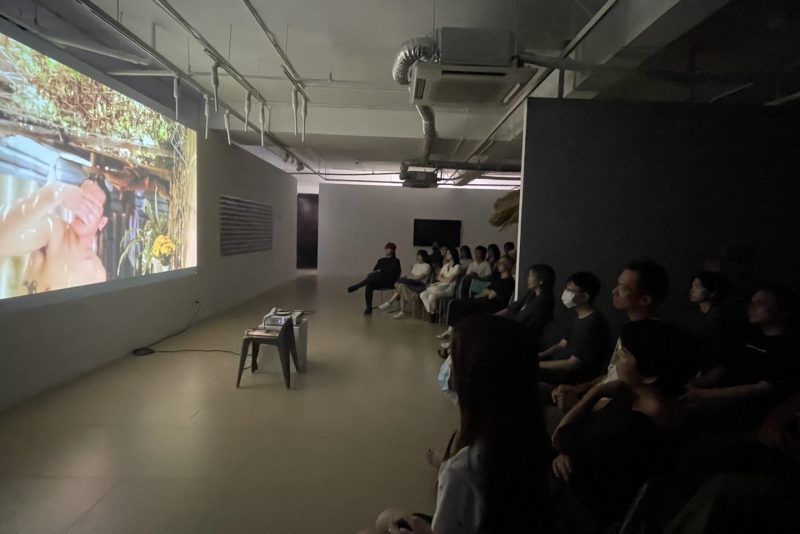
the dance mimes secretly the refusal they cannot utter is a film program curated by Adam HajYahia for The Year Is XXXX, as well as in response to Joud Al-Tamimi’s rotating curation titled Letter to the Cadres. The program draws on Frantz Fanon’s writings while also departing from his formulation, through poetic appropriation, to think of different modes of moving in the world that refuse the imposition of the state of siege, stillness, and inactivity. The framework of the program favors poetic acts materialized in movement over dialogue that is bound by speech, with the intention to move beyond the failure of language in these times of crisis. When speech is not heard because of who utters it, when a common dialect no longer indicates kinship, and words lose meaning in the face of a surpassing disaster, movement springs forth, taking its place.
By taking different subject positions of figures that move through the colonial and imperial ruins, this program attempts to articulate political subjectivity not through analysis but poesis. We follow the six dismembered figures in their movement: the Forager, the Fugitive, the Dreamer, the Militant, the Maroon, and the Smuggler, as they stretch, move, reach, and leap towards new possibilities.
List of films:
The Melancholy of this Useless Afternoon, chapter II, 2023, Dina Mimi
To Exist Under Permanent Suspicion, 2023, Valentin Noujaïm
Foragers, 2022, Jumana Manna
Black Celebration, 1988, Tony Cokes
Only the beloved keeps our secrets, 2019–2021, Basel Abbas & Ruanne Abou-Rahme
Men of my dreams, 2020, Gelare Khoshgozaran
Crispim/Encomendador de Almas, 2006–2022, Eustáquio Neves